For home listening · handcrafted in Sydney

SAT MK1.1A small speaker with a remarkably complete voice.

A true bookshelf loudspeaker shaped by French acoustic experience, bespoke Audax drivers and the natural character of marine-grade birch plywood.
Current price and availability confirmed directly with MAD
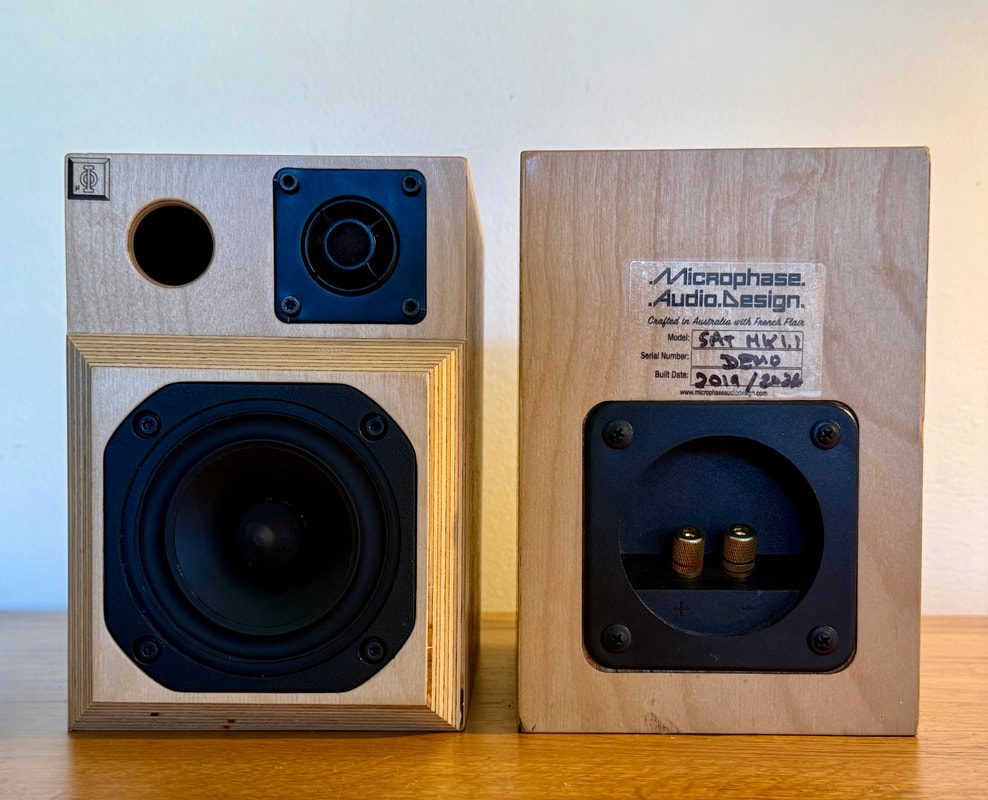
Front and rear view of Microphase SAT MK1.1 compact loudspeakers SAT MK1.1 · birch ply
210 mmSquare cabinet face
90 dBSensitivity · 1 W · 1 m
60 Hz–25 kHzStated response · ±6 dB
2-wayBass reflex monitor
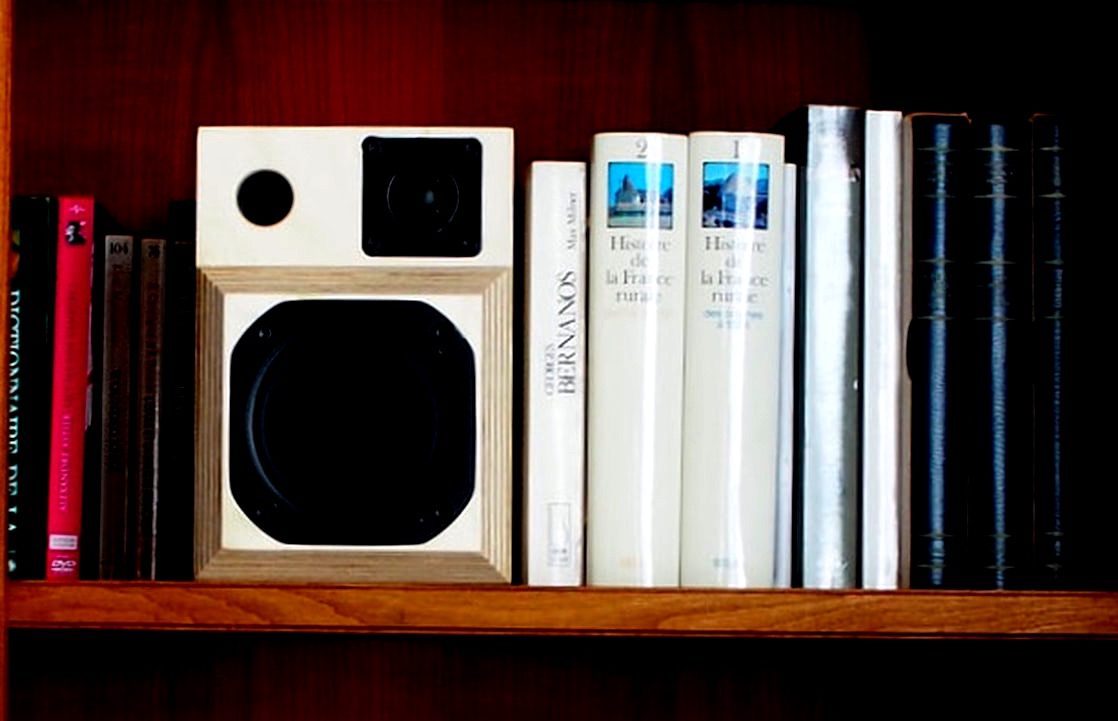
Microphase SAT loudspeaker sitting naturally among books on a shelf

True bookshelf scale

Made to live with your music.

The SAT story began with Microphase's original compact loudspeaker in 1984. The MK1.1 keeps that small, useful form while accommodating a newer bespoke Audax main driver, a high-performance Audax tweeter and upgraded crossovers introduced in 2026.

Its time-aligned tweeter and exposed birch-ply construction make the engineering visible. Its purpose is simpler: let voices, instruments and spatial cues feel coherent in the room.

“How can these small speakers produce such a big and precise sound?” — Visitor comment recorded at a hi-fi show

The art and the science

Small by design. Serious in execution.

Each choice serves the same goal: a compact loudspeaker that is easy to place without treating musical scale as an afterthought.

01 · French drivers

Bespoke Audax components.

A paper-cone main driver with phase plug and a matching high-performance tweeter are made by Audax in France for this design.

02 · Australian craft

Birch ply, honestly expressed.

The marine-grade plywood cabinet receives a clear polyurethane finish that retains the warmth, layers and individuality of the material.

03 · Placement

A genuine bookshelf speaker.

At 210 × 210 × 145 mm, the SAT MK1.1 is proportioned for shelves, stands and smaller listening spaces.

Measured and listened to

The response is part of the story. Music is the test.

Microphase combines measurement, crossover refinement and extended listening. The design targets a smooth audible response and coherent handover between its two bespoke drive units.

Emotion is the measure. Engineering is how we get there.
SAT MK1.1 measured frequency responseSmooth response from 20 Hz to 20 kHz on a 41 to 91 dB scale: about 64 dB at 20 Hz rising to about 75 dB from 250 Hz, a small dip to about 71 dB near 1.1 kHz, then 73 to 77 dB up to 20 kHz. 1/6-octave measurement.41516171819120501002005001k2k5k10k20kFrequency (Hz)Sound pressure (dB SPL)Hover over the chart to explore what you hear in each rangeSUB-BASSSub-bass 20–60 HzFelt more than heard. The weight under a kick drum, a pipe organ's pedal notes, the rumble of a synth bass line, thefloor of an orchestra.What lives here: Kick drum · pipe organ · synth sub · double bass low notesBASSBass 60–250 HzThe engine room. Punch, groove and body live here: the bass guitar's fundamentals, the thump of a kick, the lowernotes of cello and piano.What lives here: Bass guitar · kick drum · cello · piano left hand · tomsLOWER MIDSLower mids 250–500 HzWarmth and fullness. The body of an acoustic guitar, the chest of a male voice, the wood in a string section. Too muchhere sounds muddy; the right amount sounds rich.What lives here: Acoustic guitar body · male vocals · viola · French hornMIDSMids 500 Hz–2 kHzWhere the music lives. Almost every instrument has its core here: vocals, snare, horns, guitars and keys. If the midsare honest, the whole recording makes sense.What lives here: Vocals · snare · trumpet · electric guitar · pianoUPPER MIDSUpper mids 2–4 kHzPresence and intelligibility. Your ear is at its most sensitive here, so consonants, pick attack and the bite of ahorn section come forward. A little goes a long way.What lives here: Vocal consonants · guitar attack · violin · saxophonePRESENCEPresence 4–6 kHzClarity and definition. The snap of a drumstick on a rim, the edge of a cymbal, the detail that makes a voice soundclose rather than distant.What lives here: Cymbal strike · rim shot · vocal sibilance · plucked stringsBRILLIANCE AND AIRBrilliance and air 6–20 kHzSparkle, shimmer and space. Cymbal decay, a singer's breath, the sense of the room around the performers. This is whatmakes a recording feel open.What lives here: Cymbal shimmer · breath · hi-hat · room ambienceSAT MK1.1 measured frequency responseSmooth response from 20 Hz to 20 kHz on a 41 to 91 dB scale: about 64 dB at 20 Hz rising to about 75 dB from 250 Hz, a small dip to about 71 dB near 1.1 kHz, then 73 to 77 dB up to 20 kHz. 1/6-octave measurement.415161718191201001k10k20kFrequency (Hz)Sound pressure (dB SPL)
Sub-bass 20–60 Hz

Felt more than heard. The weight under a kick drum, a pipe organ's pedal notes, the rumble of a synth bass line, the floor of an orchestra.

Kick drum · pipe organ · synth sub · double bass low notes

Bass 60–250 Hz

The engine room. Punch, groove and body live here: the bass guitar's fundamentals, the thump of a kick, the lower notes of cello and piano.

Bass guitar · kick drum · cello · piano left hand · toms

Lower mids 250–500 Hz

Warmth and fullness. The body of an acoustic guitar, the chest of a male voice, the wood in a string section. Too much here sounds muddy; the right amount sounds rich.

Acoustic guitar body · male vocals · viola · French horn

Mids 500 Hz–2 kHz

Where the music lives. Almost every instrument has its core here: vocals, snare, horns, guitars and keys. If the mids are honest, the whole recording makes sense.

Vocals · snare · trumpet · electric guitar · piano

Upper mids 2–4 kHz

Presence and intelligibility. Your ear is at its most sensitive here, so consonants, pick attack and the bite of a horn section come forward. A little goes a long way.

Vocal consonants · guitar attack · violin · saxophone

Presence 4–6 kHz

Clarity and definition. The snap of a drumstick on a rim, the edge of a cymbal, the detail that makes a voice sound close rather than distant.

Cymbal strike · rim shot · vocal sibilance · plucked strings

Brilliance and air 6–20 kHz

Sparkle, shimmer and space. Cymbal decay, a singer's breath, the sense of the room around the performers. This is what makes a recording feel open.

Cymbal shimmer · breath · hi-hat · room ambience

SAT MK1.1 measured frequency response, 1/6-octave, 41–91 dB SPL. Redrawn from the original measurement; the curve was read off the measurement screen against its own gridlines (about ±0.3 dB).

Technical details

Specifications

The current published specification for the passive SAT MK1.1.

Discuss my system
Configuration
Two-way, bass reflex miniature monitor with time-aligned tweeter
Cabinet
Marine-grade birch plywood with clear polyurethane finish
Main driver
Bespoke Audax paper membrane driver with phase plug
Tweeter
Bespoke high-performance Audax tweeter
Dimensions
210 × 210 × 145 mm
Frequency response
60 Hz–25 kHz ±6 dB
Efficiency
90 dB / 1 W / 1 m
Nominal impedance
4 ohms
Crossover
4 kHz · 6 dB/octave
Power handling
50 W

Designed from every side

Hear the difference

Could the SAT MK1.1 be right for your room?

In SydneyArrange a personal listening session with Jean-Marie.
Elsewhere in AustraliaShare your room, amplifier and listening habits for a personal recommendation.

Contact Jean-Marie directly about SAT MK1.1. Your email will include the model name, so he knows which speaker you are asking about.

Email Jean-Marie ↗Call MAD ↗Contact MAD directly ↗
BUY DIRECT FROM MAD

Ask Jean-Marie about SAT MK1.1.

Discuss your room, system and any suitable personal refinements directly with the maker. MAD will confirm current price, availability and order terms.

Ask about the SAT MK1.1