Low foundations
The rear bass driver is crossed at 150 Hz in the documented design, supplying low-frequency weight from a compact enclosure.
Design & craft · Microphase Audio Design
Natural materials, visible craft and deliberate acoustic choices, all in service of the music.
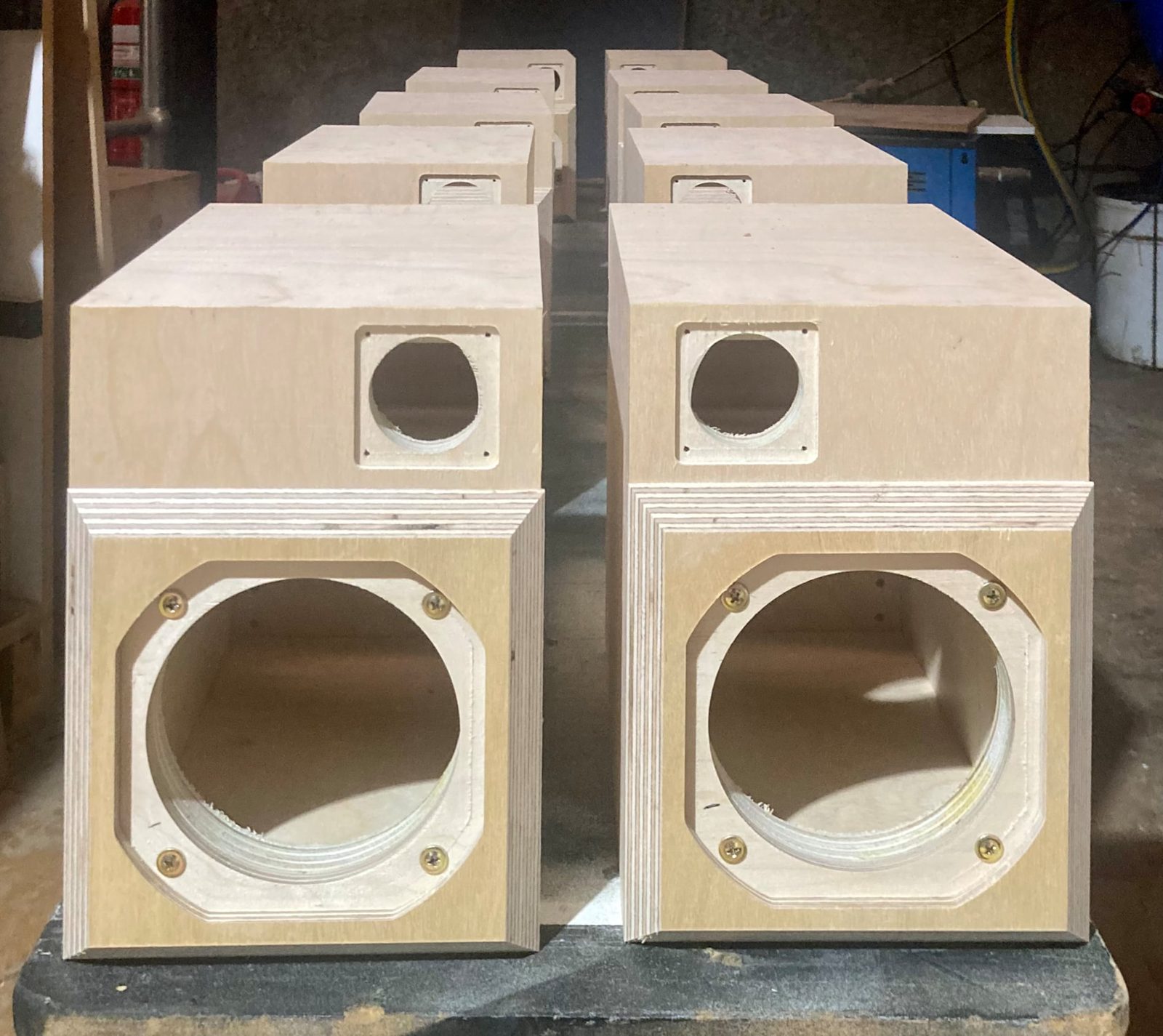 The work before the finish
Where form meets purpose
Jean-Marie Lière has designed loudspeakers and studio monitors over several decades. Across different sizes, the challenge is to make the cabinet, drivers and crossover work together for the music.
Three decisions connect the visible craft to the sound: cabinet geometry, carefully chosen drive units, and crossover design. The details below illustrate a documented three-way design; they are not a specification for every MAD speaker.
Material with a purpose
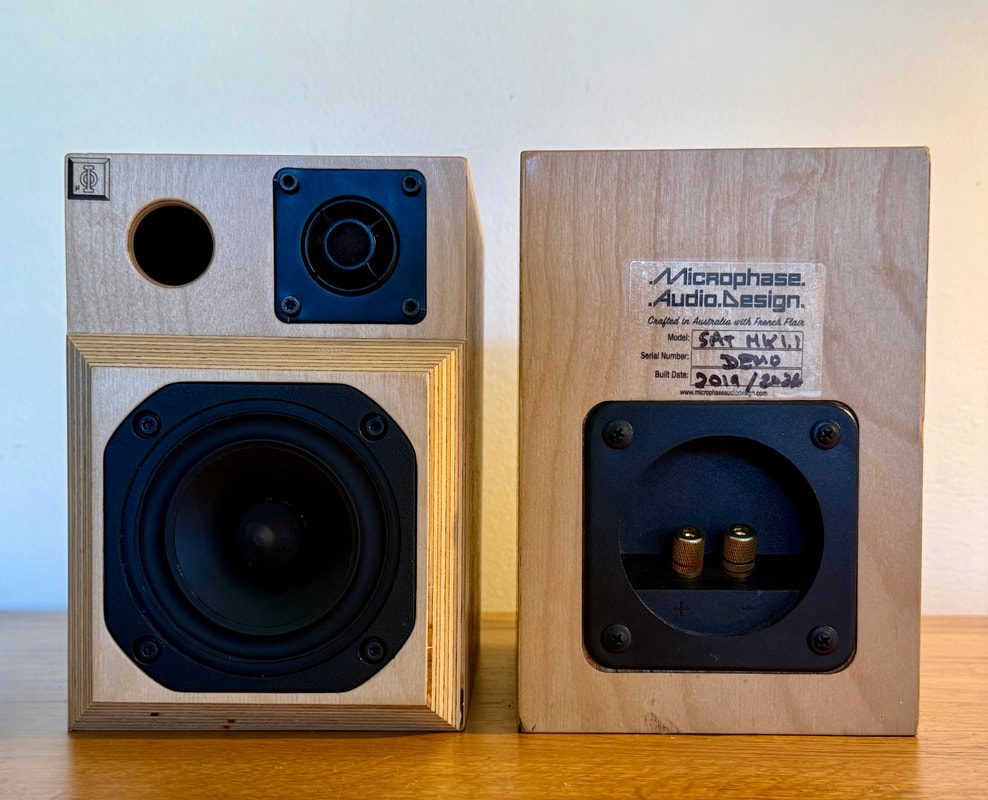
Microphase’s published design notes describe a marine-grade Finnish birch-ply cabinet with an 18 mm body and a 15 mm stepped front baffle in one three-way design. The layers remain visible; the stepped face helps place the tweeter and midrange in time.
That compact geometry is a deliberate acoustic choice as well as a visual signature.
Shown: unfinished cabinets from the Microphase workshop and a finished compact loudspeaker.
Chosen for the whole system
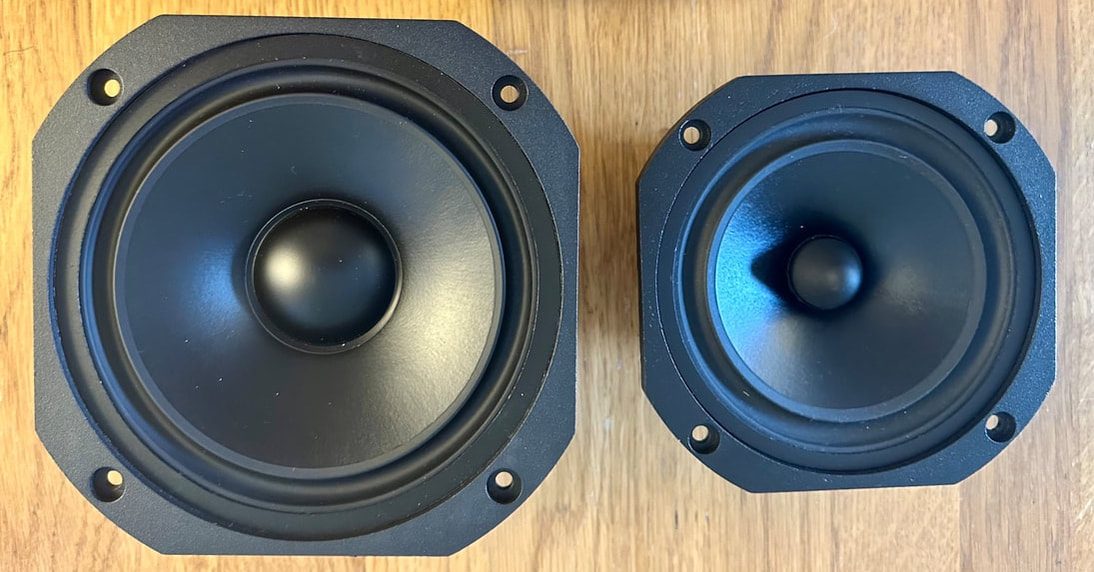
Microphase describes bespoke Audax drive units made in France and the work of matching them to a cabinet. The documented three-way design pairs a paper-cone midrange and rear bass driver with a soft-dome tweeter.
Rather than treating a component list as the result, the design asks how those units work together in the room.
Shown: drive-unit detail from the existing MAD image collection.
03 / The crossover
The published design principles explain how one three-way model divides the work between its drivers. This simple reading guide makes that engineering legible without pretending to be a measurement chart.
The rear bass driver is crossed at 150 Hz in the documented design, supplying low-frequency weight from a compact enclosure.
The midrange carries the central part of the signal before rolling off at 4 kHz.
The tweeter joins at 4 kHz, completing the handover to the highest frequencies.
Illustrative explanation of one published Microphase design; not a frequency-response measurement or a claim about every model.

Designed by Jean-Marie Lière
The materials and measurements matter because of the music they help reproduce. That connection between engineering and listening is the story this page should tell.
Arrange an audition ↗